China Drafts Landmark Gig Worker Labor Rights Rules
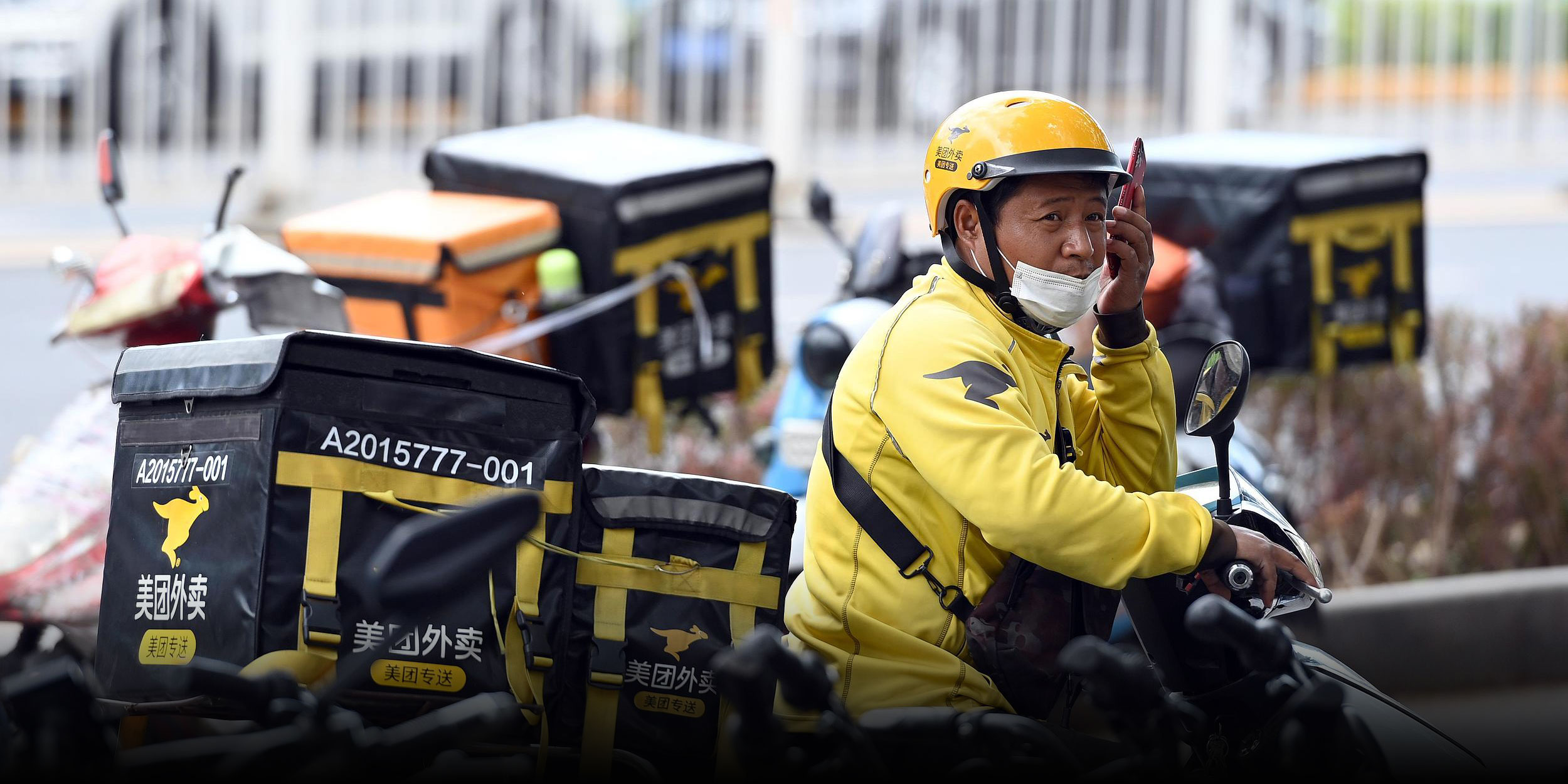
China has drafted its first departmental rules on gig workers’ labor rights, strengthening protections for platform-based flexible employees such as food delivery riders.
The draft, released by the Ministry of Human Resources and Social Security on Oct. 8, is open for online public feedback until Nov. 8.
The proposal comes as flexible employment grows in China, with the number of people in flexible employment — including those who rely on internet platforms to earn a living — projected to reach 320 million this year, according to the China New Employment Research Center. Gig work has also come under fire for subjecting workers to excessive hours, opaque algorithms, and gaps in social security coverage.
In 2021, China introduced its first guidelines clarifying platforms’ responsibilities toward gig workers regarding employment, remuneration, social security, and workplace safety. In 2024, the country issued related guiding cases, and this July, it expanded occupational injury insurance for gig workers.
Under the new draft, platforms and their partner businesses must sign labor contracts with workers that meet the legal criteria for employment relationships, such as full-time employees. It excludes people who use online platforms to run their own businesses independently or offer freelance services on their own terms.
For workers in more flexible arrangements, such as part-time work or work across multiple platforms, platforms must sign written employment agreements specifying pay, labor protections, and liability for breaking the agreement, among others. When platform companies and partner businesses jointly manage workers, all three parties must sign a written agreement.
The draft also clarifies dispute resolution procedures. Platforms bear primary responsibility for overseeing partner businesses’ employment practices, and workers involved in legal disputes may name both the platform and its partner as parties to a case. When workers challenge pay, working hours, performance reviews, or account bans, companies must investigate and respond within 48 hours.
Platforms must also build reasonable task-allocation systems and performance metrics into their algorithms, avoid encouraging excessive work through targets or incentives, and explain relevant algorithmic rules to workers and authorities.
Decisions with “significant consequences for workers,” including suspending work assignments or banning accounts, must also undergo human review.
The draft further states that employers will face legal responsibilities and penalties for violations under existing legislation. For instance, employers may be required to pay outstanding wages, overtime pay, or economic compensation. If wages fall below the local minimum wage, employers must pay the difference.
“The draft’s biggest breakthrough is placing workers who are under the management of platforms but do not fully fit into an employment relationship under protections, and applying past traditional labor laws to flexible platform-based work,” Wang Tianyu, a researcher at the Chinese Academy of Social Sciences’ Institute of Law, wrote in a related commentary.
“At the same time, it establishes mechanisms to hold companies accountable and prevent them from evading employment obligations, such as through subcontracting or inducing workers to register as individual businesses,” he said.
Editor: Marianne Gunnarsson.
(Header image: VCG)