China Misses Basketball Medal in 2nd-Worst Asian Games Finish
China’s men’s basketball team has suffered its second-worst defeat in its history at the Asian Games, calling into question the coach’s abilities and the team’s training methods.
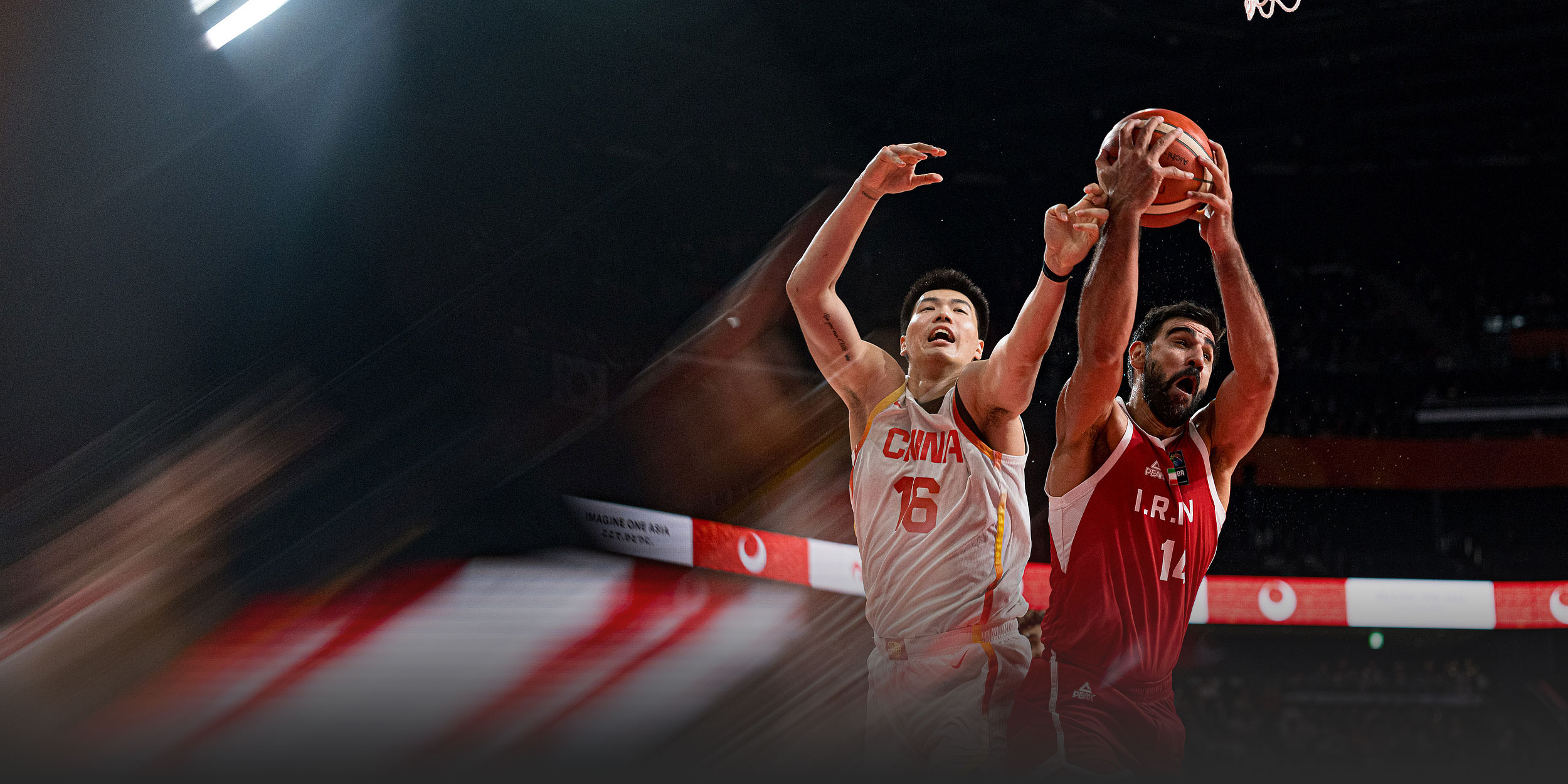
On Sunday, China lost 70-79 to Iran, two days after it lost 77-97 to Japan, host of this year’s Games, its second failure to reach the finals and its largest-margin loss in men’s basketball at the tournament. The country finished fourth, one place higher than at the 2014 Asian Games in Incheon — its worst result ever.
China has claimed eight Asian Games titles, with its most recent gold coming in 2018. Since then, China has failed to win the title.
Head coach Guo Shiqiang said the team fatigued toward the end of the tournament, noting that only nine players were available for rotation partway through the Games due to injuries. He also said the team’s younger players lacked major tournament experience and had struggled to play consistently, and that “the team had failed to execute its pregame tactical plans.”
China’s unusually long training and competition period this summer has been a focus of criticism. The team spent around 140 days in camp before the Games, domestic media reported. Internationally, teams typically spend only one to three weeks at training camps, widely considered to be intensive and demanding.
Criticism has also centered on Guo, 51, a former starting point guard for China’s national team who began coaching the team in 2006 and became head coach in 2009. After leaving the team to coach locally in 2010, he returned as head coach in 2024, and led China to a runner-up finish at the 2025 FIBA Asia Cup.
Critics have questioned Guo’s tactical approach. Against Iran, China’s defense focused heavily on protecting the net rather than the court’s three-point line, leaving space for their opponents to take jump shots and make three-pointers. The team also struggled to secure rebounds in both its matches against Iran and Japan.
Others criticized Guo’s offensive strategy, arguing that he relied too heavily on the backcourt, that players became isolated at crucial moments, and that his in-game player selection was overly conservative.
The defeats have prompted broader discussion about whether China’s traditional approach of requiring athletes to spend a large portion of the year in training camps can keep pace with changes in the sport, particularly the increasing emphasis on spacing, perimeter shooting, and shooting efficiency.
“Everyone on our team has worked extremely hard this summer,” Guo said in a post-game interview with domestic media. “Every member of the Chinese men’s basketball team has put in a tremendous amount of effort.” His comments sparked widespread backlash online, with many arguing that the team’s prolonged exhaustion from training camp caused the poor results.
Editor: Marianne Gunnarsson.
(Header image: Jiao Boqiao (left) of China blocks a shot by Mohammad Jamshidi of Iran during the men’s basketball bronze medal match between China and Iran at the 20th Asian Games in Nagoya, Japan, Sept. 20, 2026. Andy Cheung/Getty Images/VCG)