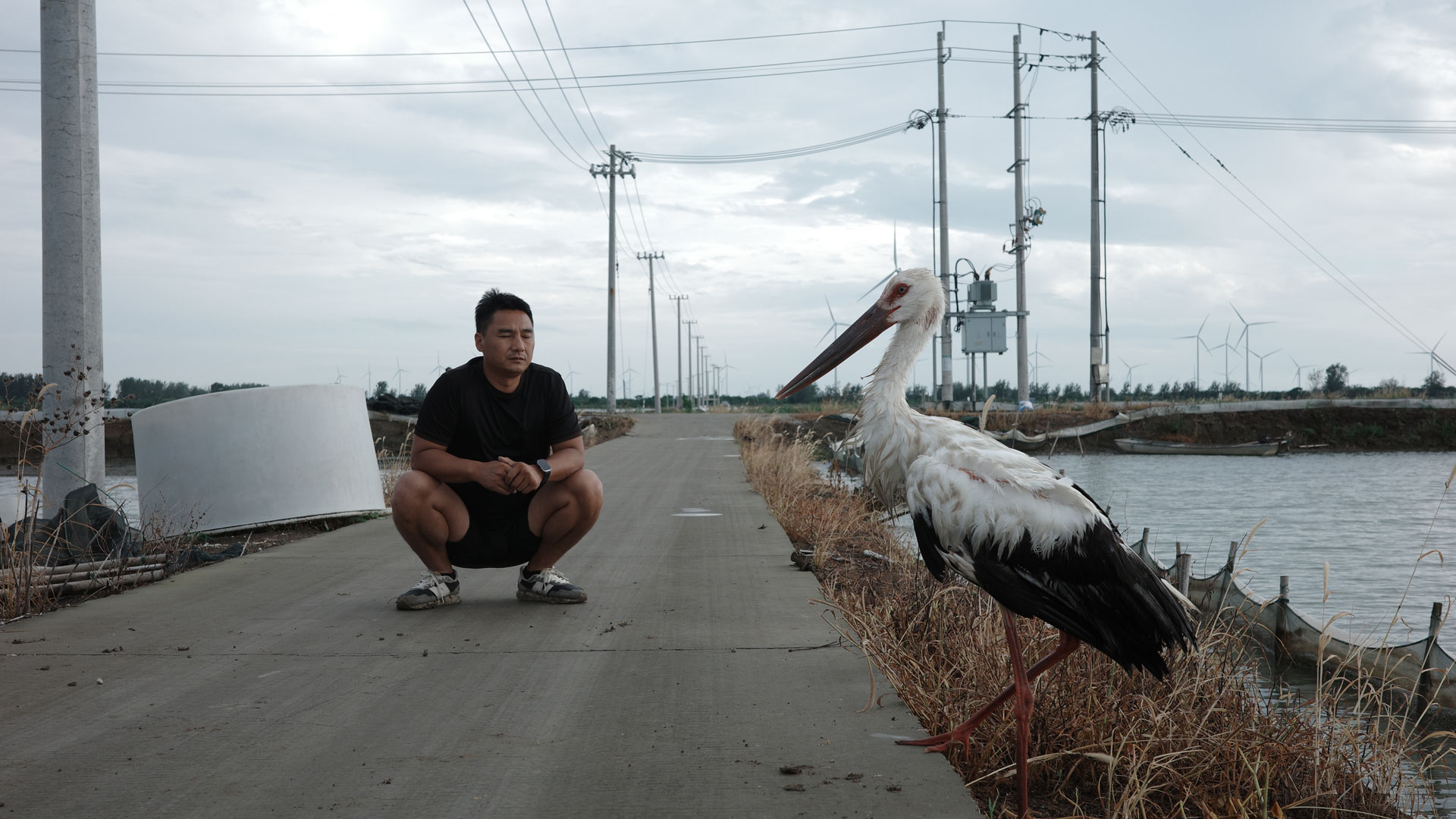
A Crab Farmer and His Uninvited Guests
Thanks to years of ecological restoration, endangered Oriental storks have been expanding their range around Gaoyou Lake in the eastern Jiangsu province. In recent months, dozens have descended on crab farmer Hu Dingsong’s ponds, bringing him online fame — and huge economic losses.
Hu first spotted two or three storks in April. After learning they were a nationally first-class protected species, he was delighted. “I even joked online that my pond had crabs to spare,” he said.
But the numbers quickly grew: over 20 by mid-May, to more than 40 by early June, to their present numbers of around 80. Hu estimates that the birds collectively eat roughly 2,400 crabs a day, costing him 30,000 to 40,000 yuan ($4,200-$5,600) daily. His agricultural insurance does not cover wildlife damage.
Forestry officials have alo banned Hu from using firecrackers to drive the birds away, as they are a protected species. Netting such large ponds is also impractical, and offering the birds other food sources — such as fish — introduces disease risks, leaving him with little recourse.
Lu Changhu, a wildlife ecology professor at Nanjing Forestry University, said storks staying in the province during summer is not new. Once mainly winter visitors, more have begun staying around Gaoyou Lake and nearby wetlands as their population has grown. Some may skip migration when food is plentiful, he said.
Local officials have provided Hu with a drone to monitor the flock and are helping address his losses, but farmers currently lack official channels to pursue compensation for wildlife damage.
Hu is now urging authorities to work with farmers on solutions that protect both the birds and their livelihoods.