How I Brought China’s Vibe-Coding Revolution to Rural America
As the car chugged up a dark, winding mountain road in eastern China’s Fujian province, I began to worry that I had made a huge mistake.
I had come to this remote mountainside to explore China’s push to harness the rise of artificial intelligence to drive growth in the countryside — a campaign I believed could offer some interesting lessons for the rest of the world.
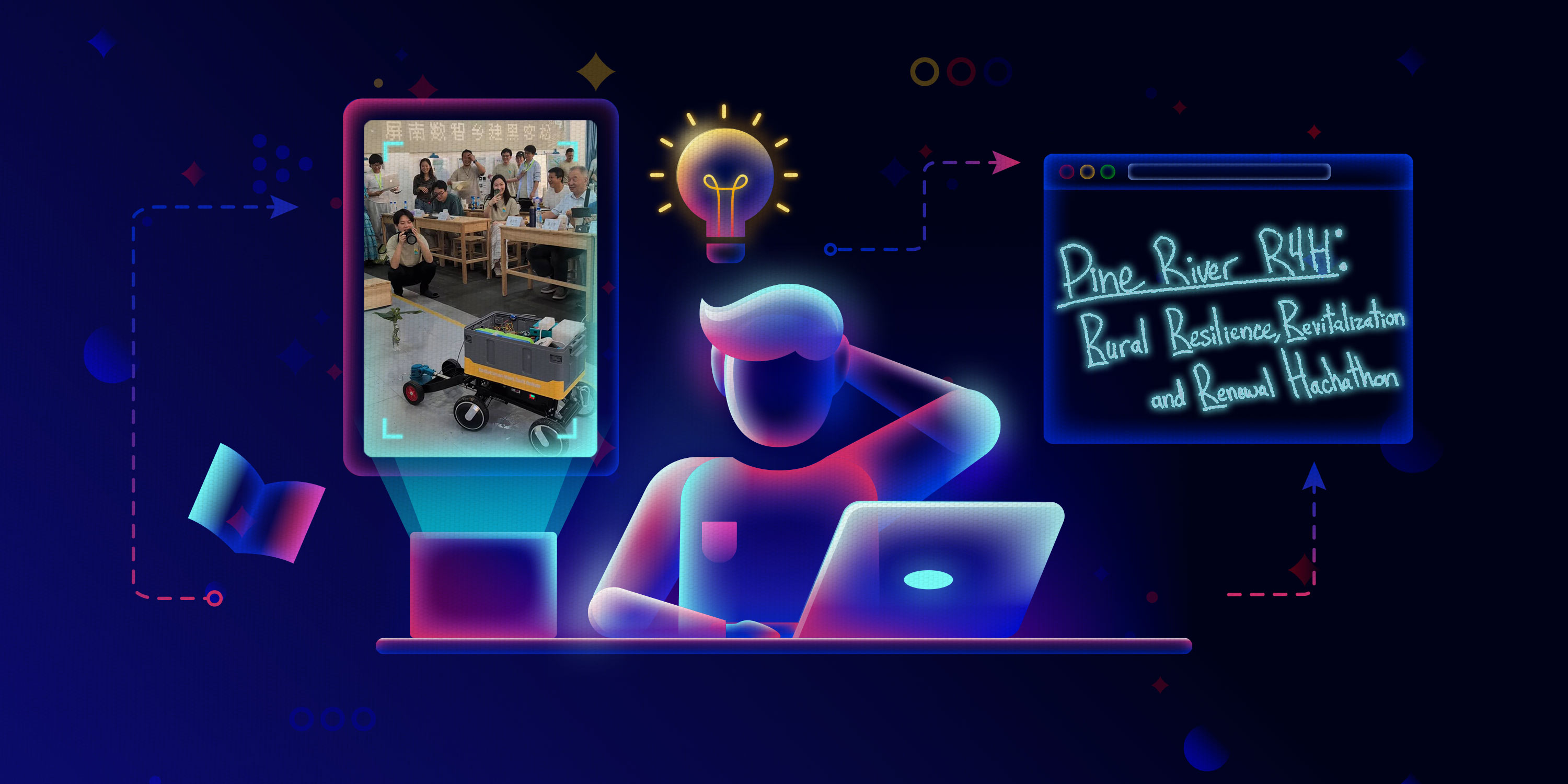
A few days earlier, at a tech event in Shanghai, a contact had mentioned that a village in Fujian was about to host the country’s first “rural hackathon.” The idea immediately intrigued me. I had attended several hackathons in Silicon Valley over the years, but these events were typically sleepless, caffeine-fuelled contests where expert coders would team up to hammer out hundreds of lines of code over a few days.
To many in the Bay Area, the idea of holding a hackathon outside of a major tech industry hub — let alone in a tiny village — would have seemed like an outlandish proposition. Non-coders tended to be viewed as afterthoughts at best, or dead weight at worst.
But China seemed to be taking a different approach, leaning into the potential for new AI tools to lower the barriers to creating and running online businesses. Curious to learn more, I’d booked a ticket for the event — and jumped on a train from Shanghai.
But Longtan Village turned out to be even more remote than I’d imagined. Getting there involved taking a sleek high-speed train to neighboring Zhejiang province, then a much slower “green train” to the city of Ningde in Fujian, followed by an hourlong car ride up a snaking mountain track.
They weren’t really planning to host a hackathon here, were they?
My doubts eased somewhat once I arrived at the village. A brightly lit hall stood out like a beacon in the darkness, where a couple of young volunteers were welcoming latecomers with care packages, farmer’s hats, and directions to a hotel offering free accommodation, where I’d be sharing a room with another participant I hadn’t yet met.
As the only foreigner joining the event, I was first asked whether I could speak Chinese. I acknowledged a shaky command of the language, collected my things, and trudged off through the dark to find my room, as I nervously wondered how I would pitch a startup entirely in Mandarin.
But I was excited to get an up-close look at China’s vibe-coding revolution. As someone with family in rural Michigan, I have long had a keen sense for how accelerating technological change has deepened class and regional inequalities — and tried to find ways to bridge those divides.
Since college, I have tried to use my experience in the tech industry to drive social change, working on a range of projects to empower local communities. My trip to China was part of that effort, as I hoped to gain new ideas from the dynamic tech scene here.
Longtan, it turned out, offered an interesting case study. The village was no ordinary Chinese farming community — it was more like a social experiment, driven by a combination of government policy and youthful idealism.
Over the past few years, Longtan has seen a growing influx of young people looking to escape the intense pressure of life in China’s major cities. The local authorities have encouraged the inflow, seeing it as a way to revive the local economy after decades of urban migration.
The new residents moved into renovated buildings alongside the original villagers, and set up a non-hierarchical online cooperative known as the DAO to manage their affairs. They made a living by painting, running hotels and cafés, or as digital nomads.
Now, the village was jumping on a new trend in China: people setting up one-person companies, or OPCs, using a mix of AI models and agents to launch and run startups on their own. The village hoped the OPC wave would create new jobs and attract more newcomers, lifting the local economy.
As I strolled towards the assembly hall for the opening ceremony, it was easy to see why people wanted to come here. A river ran through the center of town, weaving downhill over gentle rapids past boutique shops and footpaths. Rows of souvenirs sat unattended, and passersby could simply take what they wanted and pay by scanning QR codes.
At the ceremony, I found most participants were young people from around China, plus a contingent of “new villagers” who had moved here permanently. The original villagers, by contrast, were mostly the ones serving Fujianese soups in local restaurants, operating small convenience stores, or helping to run the guesthouses.
It was a dynamic worth sitting with. The new villagers had undeniably created something — opportunities, foot traffic, a reason for outsiders like me to show up — but the question of whom all this development was meant for lingered at the edges of every conversation. Perhaps the hackathon was meant to start answering it.
We could submit up to two projects and join two teams, but I spent the bulk of my time pursuing the OPC route with my own idea. Since the U.S. had pulled the last vestiges of the Peace Corps out of China during the pandemic, I used AI agent Vercel’s v0 tool to vibe code a website for something I’d dubbed “Compass Corps”: a bilateral alternative to the Peace Corps, whereby mixed American and Chinese teams would engage in service projects in one another’s countries before going out into the world together to tackle global problems.
The competition had multiple tracks, and many teams built conventional tech products like those you might see at traditional hackathons. But artists were building complex apps at the same rate as engineers, thanks to the leveled playing field that vibe coding had enabled. Both American and Chinese AIs were heavily used, with America’s Claude Code by Anthropic still extremely popular despite the rise of domestic open-weight models.
After a five-minute pitch to a panel of village leaders and guest judges, my individual project ended up claiming joint third prize. It may have been a pity vote for the lone foreigner, who stumbled through a presentation in basic Mandarin, though I’d like to think the concept has some merit of its own.
After the weekend, I left the village to continue my tour of China. Beyond Shanghai and Longtan, I also spent a week in the southern city of Shenzhen exploring the nation’s tech renaissance and made multiple trips to Hangzhou in the east to establish a local counterpart to my American-registered robotics teleoperation project. But it was the hackathon in Fujian that stayed with me most.
Prior to the AI revolution, organizing a hackathon in a place like Longtan would have been a questionable proposition. Even New York City hadn’t had anywhere near as many hackathons as Silicon Valley, despite having a population many times larger than the Bay Area’s.
But this event in rural China, with its preponderance of non-coders, made me realize how much things could change. If AI has enabled anyone to build, what’s stopping us from bringing hackathons to the masses? In my home country, why haven’t we been showing the average American how they can make ideas come to life in front of their eyes?
The idea grew after I returned to the U.S. and visited family in Michigan. Back in LeRoy, a small town where I spent the best parts of my childhood, I noticed local Amish families had started installing solar panels on their homes in surprising numbers. Connection to the electrical grid was apparently still taboo, but electricity itself no longer was.
If the Amish — an insular and extremely traditional ethnoreligious group — could leapfrog into the future on their own terms, I felt reasonably confident leveraging my Longtan experiences to organize Michigan’s first rural hackathon.
I started by renting the fellowship hall of an old church on the edge of town. The original congregation had dwindled until it ceased to be functional, and the building had since been converted into a rentable community space. The caretaker was an energetic military veteran of my mother’s generation who had relocated to her husband’s home state after a career in the nation’s capital. To my surprise, she had worked in IT and knew exactly what a hackathon was.
Although I’d privately faulted the Chinese hackathon for largely excluding the village’s original residents, I began to see that the knowledge gap was a real issue. My host mentioned that members of a local committee were frightened by the word “hackathon” — they worried that local services or businesses would get “hacked” or otherwise disrupted by our event.
But I still believed that locals needed to be at the forefront of reshaping their own communities. Although the town was due to celebrate its annual festival that day, I wrote up a schedule and decided to use the first hour of the daylong event to walk participants through the general ethos of a hackathon, how vibe coding works, and how they might use it to solve everyday problems.
I posted flyers on the public bulletin boards of local restaurants, banks, and post offices, and then put up signs and set out snacks and soda pop at an outdoor registration table on the day of the event.
Turnout was slow at first, and the people who stopped by seemed more curious than committed. An old Amish couple even rode past on a horse and buggy, visibly perplexed by the word “hackathon,” before saying hello and continuing on their way.
For a while, I wasn’t sure whether I had only learned something theoretical in China, or whether the concept could travel beyond its country of origin and the specific demographic of young urbanites who had come down to Longtan.
True to startup tradition, I decided to pivot. I left the community center and walked to the center of the village, telling attendees of the town’s annual fair that I was running a new type of competition.
They could enter the contest by submitting their best ideas for improving the town — new businesses, public infrastructure, apps, nonprofits, or anything of interest. I would then feed each idea into an AI vibe coding tool, build something to best express each concept, and eventually invite our small panel of judges to pick a winner.
Rather than simply coming to town, teaching people to vibe code, and hoping for a hundred technological flowers to bloom, I really had to start somewhere more fundamental: people first needed to learn that it was possible to participate in the process of solving local problems, and only after that realization might they have an interest in leveraging AI tools to amplify their impact.
One resident said that the village was a “laundry desert” and that she adamantly wanted to solve this problem. Many families in modular homes and trailers had no washing machines and thus had to drive 40 minutes round-trip to nearby Cadillac or down the freeway to Reed City to locate a laundromat. Even my grandfather’s house, where I was staying, itself lacked a washer or dryer.
After reviewing submissions ranging from splash pads to car washes, the judges reached their verdict: the biggest opportunity for scalable impact was solving the aforementioned laundry problem. The winner received a grocery store gift card and a promise we’d build something more comprehensive in response to her problem statement.
After a few hours of perfectionist prompt engineering via v0’s natural language interface, we had something that actually solved her problem: a community tool that we’d dubbed “WashMapper.”
It was a simple concept: a peer-to-peer laundry marketplace where neighbors with a washer and dryer can list open time slots, and anyone needing laundry done can book a slot nearby. Whether WashMapper takes off in any meaningful way remains to be seen, but at the very least it exists, and people started thinking about what a solution might look like.
Just like LeRoy, I’d need to return to Longtan to see whether anything we’d built had found practical use. Interestingly enough, washing machines also came up during my conversations with business owners in the Chinese village, which made me feel that we humans aren’t so different.
Sitting with my learnings from Longtan and LeRoy also made me rethink a tenet I’d first learned while living in Silicon Valley. Everything needed the ability to scale nationally, if not globally. But these towns didn’t need a scalable platform; they needed solutions rooted in local networks, like clean laundry.
Although most hackathon projects soon go dormant after the initial event, perhaps one or two ideas will have taken root, and that makes all the difference. Similarly, if WashMapper never takes off in LeRoy, maybe another town will run with it, or be inspired to host its own hackathon, or whatever they want to call it.
And even if the average Longtan resident didn’t join the hackathon, they couldn’t have missed it. Banners hung throughout the village, there were frequent gatherings in the town square, and people coded in the coffeehouses. Anyone walking through saw an unavoidable display of energy, possibility, and something resembling hope.
Honestly, we need more of that in the world. We can’t simply throw up our hands and hope that the future treats us kindly. AI isn’t going to solve all the world’s problems, and it’s noticeably creating a few new ones. But it’s worth paying attention to how powerful technologies can be harnessed for the common good, even if it’s as simple as a clean pair of jeans.
(Header image: Visuals from the author and Shijue/VCG, reedited by Sixth Tone)