Ancient Teeth Link Chinese Hominins to Modern Humans
Chinese scientists have for the first time recovered informative molecular data from 400,000-year-old Homo erectus teeth. The findings imply a previously unknown connection — discovered via protein analysis — between H. erectus, other hominins, and present-day humans.
The study, published in Nature on May 13, was led by Fu Qiaomei, deputy director of the Institute of Vertebrate Paleontology and Paleoanthropology of the Chinese Academy of Sciences. Collaborators included the Anhui Provincial Institute of Cultural Relics and Archaeology. The fossils came from three Chinese sites — Zhoukoudian in Beijing, Hexian in the eastern Anhui province, and Sunjiadong in the central Henan province.
The evolutionary history of H. erectus is debated, especially whether these hominins contributed to later Asian populations. H. erectus remains have been found across Africa, Eurasia, and Southeast Asia dating back around two million years, but their great age and poor preservation have made it difficult to obtain molecular data, such as from proteins, that lend insights into heredity, according to the study.
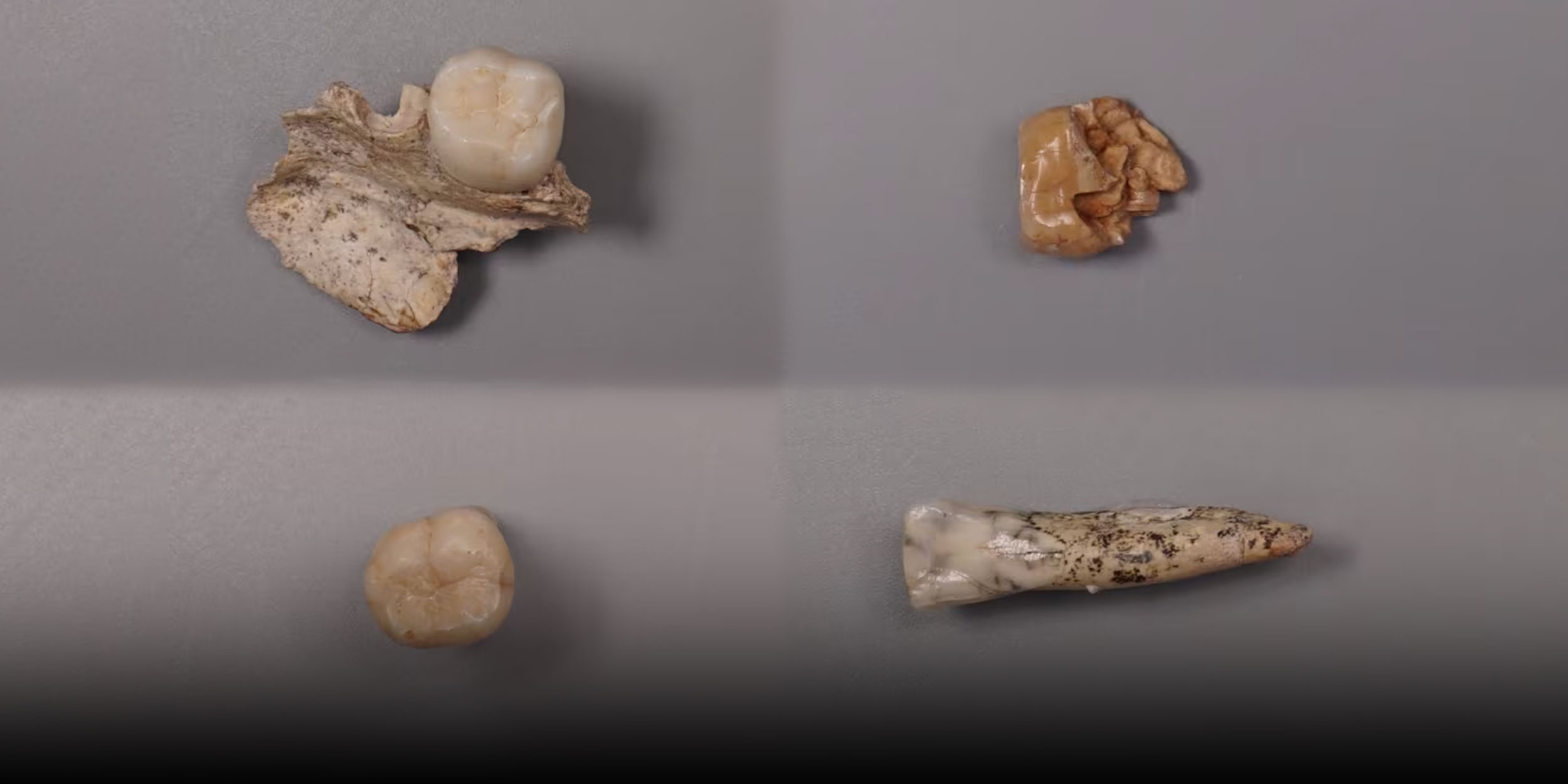
Researchers first checked whether ancient proteins were preserved in the enamel of six H. erectus teeth, all dating back roughly 400,000 years, using mass spectrometry — a technique in which ions are separated based on their mass-to-charge ratio. Comparing which protein variants were present across samples, as well as in previous samples from other hominins, could lend insight into hominin lineages. They then took tiny samples from the tooth surfaces via a new acid-etching sampling technique, which kept fossil damage to a minimum.
The team found that the six H. erectus teeth all share the same variant of the protein AMBN — known as M273V — which helps form tooth enamel. Researchers found that the same marker was also present in Denisovans, another ancient hominin in Asia.
The finding suggests that East Asian H. erectus may have contributed genetic material to Denisovans, which later passed some of these ancient genetic components to modern humans.
“In other words, the East Asian Homo erectus represented by the individual from Zhoukoudian around 400,000 years ago was one of the sources of ancient genes in the modern human gene pool,” Fu, the study’s leader, said.
The study also identified another AMBN variant across the six samples — A253G — which has not been observed previously in other known humans or primates, which suggests that the six individuals likely belonged to the same closely related evolutionary population, despite morphological differences.
An article from the Chinese Academy of Sciences said the study may provide a reference framework for investigating older hominin groups and highlights the growing role of palaeoproteomics, or the study of ancient proteins, in reconstructing human evolutionary history.
Editor: Marianne Gunnarsson.
(Header image: Four of the six Homo erectus teeth that researchers sampled for the study. From Weibo)