A Decade of Overwatch in China
I still remember the first time I watched Overwatch esports. It was the Overwatch World Cup 2019 final, and I was studying for my master’s in translation studies in the UK, crammed into a student flat with international friends. We ordered discounted KFC family buckets, watched with greasy fingers as Team China battled Team USA, and turned that basement into our own roaring stadium. Even now, the memory still gives me chills. The thrill of the spectator would become my anchor as a researcher, but in 2019, the desire for victory and maddening sense of regret tangled up into one: “So close we were! Team China!”
This year, Overwatch marks its 10th anniversary. Over the past decade, the game, developed by Blizzard, has become far more than its epic themes and engaging gameplay. For millions of players in China, it has been a shared stage, a place where competitive dreams, community bonds, and personal memories unfolded in real time, despite interruptions such as Blizzard‑NetEase suspending ties from November 2022 to April 2024. Through updates, rollbacks, and player turnover, the Chinese community has endured.
Overwatch’s appeal stems not only from its excellent design, but also from how naturally it fits into esports; the competitive video game league model encompassing professional players and clubs, organized competitions, and tournament systems. Long before Overwatch, esports had become a national sensation in China, particularly with the launch of League of Legends in 2011 and the pioneering games StarCraft, Counter-Strike: Global Offensive, Warcraft III, and DotA. Then, Blizzard launched the Overwatch League (OWL) with permanent city-based teams and no relegation, and the Overwatch World Cup (OWWC) in 2016. The landscape of OWL helped move esports offline, create local home teams, and foster regional loyalty — evidently to build a comprehensive global tournament framework.
As the Asian geographic and financial hub, China became a key player in the Overwatch esports ecosystem, with four Chinese teams and one team relocated to China in the Overwatch League. Among the teams was the Chengdu Hunters, with their panda logo, which fielded an all-Chinese roster and became a highly anticipated symbol representing Chinese patriotism. Team China earned silver medals at the Overwatch World Cup in 2018, 2019, and 2023.
For those of us who were university students when Overwatch launched in 2016, the game arrived at exactly the right moment, and perhaps, in hindsight, it was both a blessing and a curse. We were the first generation truly obsessed with Overwatch, pulling all‑nighters between classes to climb the rankings.
Now, as most of us have entered the workforce and can’t juggle real life and high‑intensity esports anymore, we have become spectators. Many of us stay part of the game by watching Overwatch esports on livestreaming platforms. During Overwatch esports streaming, those in the bullet chat, or danmu — so called for how messages fire rapidly across the screen — pounce on every success or mistake in real time. Spectating becomes a participatory emotional singalong: viewers cheer, wince, laugh, and instantly share reactions on social media, turning solitude into immediate company.
It is no exaggeration to say that Overwatch would not be what it is without fans. They set viewership records, mobilized grassroots campaigns, and turned match viewings into mini-festivals. Even though the 2020 Overwatch League Grand Final was held entirely online due to COVID-19, it drew a global average audience of 1.55 million — 38% more than in 2019. Chinese fans have even used the online tournament format to eagerly share cultural details. When Liu “Roy” Yuanyi, a prominent Chinese esports caster, or commentator, proposed to his girlfriend during a stream at the 2021 Hangzhou homestand, for instance, Chinese fans circulated the moment in English on Reddit, explaining why comments like “999999,” expressing wishes for a long-lasting marriage, flooded Bilibili streams.
Never was the fandom more crucial than during the crisis surrounding the collapse of the Blizzard‑NetEase partnership, which led to Blizzard games going offline starting in January 2023. Shortly after the partnership ended, Team China still needed to set its sights again on the Overwatch World Cup 2023. Without institutional support, participation looked unlikely, and the Chinese community showed undisguised grief. They deeply understood that Team China represented not just personal honor, but the dignity of the esports scene in China.
In the end, Chinese fans banded together and crowdfunded for essentials such as visas, flights, and housing. Largely through ticket sales for offline meet‑and‑greets, livestreaming on the events, and souvenir sales, they ultimately raised 64,594.99 yuan ($9,473), according to an open-access release on microblogging site Weibo by Li “Xiaoshuang” Yongshuang, Team China’s voluntary community manager. During the tournament, former official commentators even traveled with the team, handling logistics abroad and keeping fans updated in real time. Without the fans’ generous help, Team China simply would not have been in the world tournament.
Fan engagement goes far beyond wallets. Players play the game, while fans take ownership of its community, culture, and continuity. Fans step into roles as informal localizers, volunteer subtitlers, and grassroots promoters, stitching together time zones and platform divides. This is not unique to the Chinese community. Indeed, Overwatch fans around the world moderate chat rooms, compile highlight reels, organize watch parties, and pressure sponsors when the stakes are high. In a global ecosystem held together more by passion than infrastructure, fans are the glue.
Yet this passionate fan engagement, so crucial to the game’s survival, exists alongside persistent imbalances within the game and its esports scene. At esports tournaments like the current Overwatch Champions Series, top Chinese esports players cluster into a few teams, giving spectators a predictable yet often dull focal point. While esports streaming is on, online armchair critics usually fill live chats with jeers, and the poor play in tournaments is still tantamount to sin.
Interwoven with diverse emotions and affiliations, Overwatch and its Chinese community have reflected a tumultuous symbiosis over the past 10 years, blending the essence of the game with the competition of esports. It is both an arena and a stage, offering a sense of belonging alongside anticipation, suspense, and consumption.
The past two years in particular have seen a quiet revival of Overwatch in China. After the league disbanded in 2023, a new structure, the Overwatch Champions Series, was launched in January 2024. Once NetEase and Blizzard partnered again in February 2025, expectations rekindled. In the 2026 season, veteran players and coaches returned, prompting fans to exclaim “the same old names (of those esports players)” and reminisce “they represent our youth,” while a wave of new talents has kept matches full of surprises. In celebration of 10 years of Overwatch Esports, the Overwatch World Cup returns to the Anaheim Convention Center Arena at BlizzCon 2026.
A decade in, I am struck by the beauty of what Overwatch has brought: electric connections, lingering memories, and fleeting glory. Sadly, I am no longer the carefree teenager who lost herself in Overwatch esports back in 2016. Now, as a researcher, I ask more practical questions. Can the game balance commercialization with players’ interests amid such sweeping change? Can communities scale without losing the warmth that held them together? Can player protections ever be strong enough to keep careers from being consumed by overexposure and rumor?
There are no easy answers. The next chapter of Overwatch will be written by its officials, players, clubs, and platforms. Yet beneath the surface, something holds: a quiet knowing, across all these different stakeholders, of what to do and expect.
It is the same knowing that Harold Winston expressed to young Winston in the animated short “Recall” in 2016, and echoed again in 2021 when Overwatch’s former lead director Jeff Kaplan left the company: “Never accept the world as it appears to be. Always dare to see it for what it could be.”
Portrait artist: Zhou Zhen.
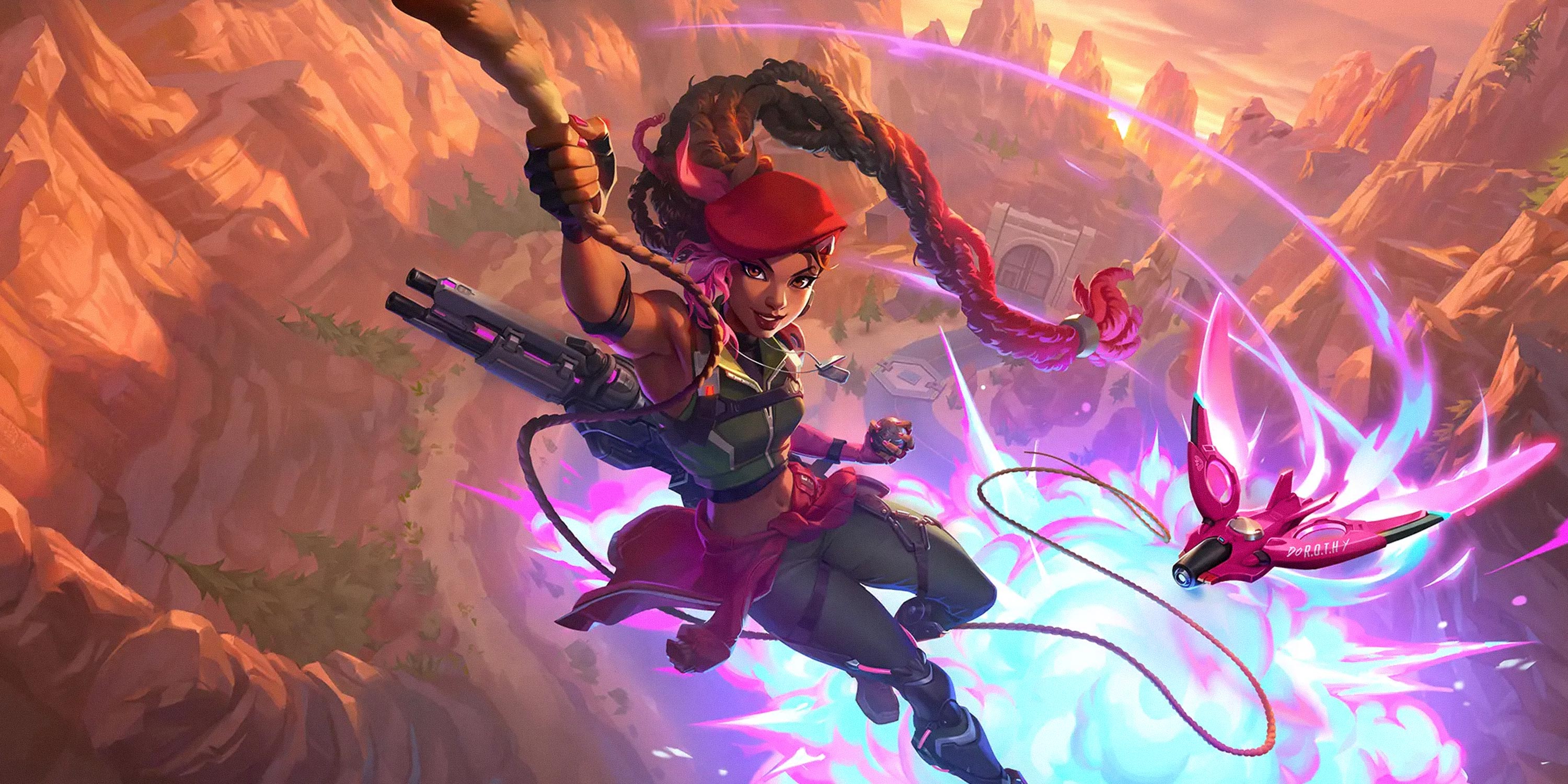
(Header image: A promotional image shows Sierra, the newest hero of Overwatch from Season 2: Summit, released on April 14, 2026. From Overwatch’s website)