The Chinese Restaurant That ‘Didn’t Want Fame’ and the Internet That Wouldn’t Listen
“Eating (my restaurant’s food) may cause diarrhea,” says a man dressed in a black T-shirt and jeans.
“If I get diarrhea (from your food), that means it’s my own problem,” replies the customer.
“Well, it’s definitely not my problem!” exclaims the first man.
This exchange between a prominent food blogger and the owner of a chicken hotpot restaurant in rural southern China has unexpectedly made it a viral destination.
Located in Foshan City in the southern Guangdong province, the restaurant — “Mo’s Chicken Hotpot” — became popular after food blogger and former TV host Liu Yuxin posted the video to multiple domestic streaming platforms on April 1. In the clip, the owner says, “Don’t make me too popular; I won’t be able to handle the business.”
In the video, other aspects of the restaurant are showcased, including chickens being slaughtered on the spot, housemade herbal liquor, and a medicinal chicken hotpot said to “remove dampness” — extracting wet elements that in traditional Chinese medicine are considered harmful to the body and caused by eating cold foods — potentially by causing diarrhea. A red sign with yellow writing on the restaurant’s wall informs diners: “After eating the soup here, some customers may need to use the restroom. This is normal.”
As of Wednesday, the video has garnered more than 100,000 likes on Xiaohongshu, also known as RedNote, and 1.4 million on Douyin, the Chinese version of TikTok, with viewers praising how fresh the food looks, joking about the owner’s nonchalance, and some even reporting that they experienced diarrhea after dining at the restaurant. Some have speculated that the owner is engaging in “reverse marketing” to attract customers.
Within days of the video’s release, crowds had clogged nearby roads, with some customers reportedly staying overnight in their cars and lining up as early as 6 a.m., according to domestic media. During the recent Qingming festival — a time traditionally dedicated to making rituals to the dead — the restaurant attracted between 2,000 and 3,000 visitors a day from across the country. A new parking lot has been built, and cameras have been installed to livestream the scene.
Chen Zuyao, a 42-year-old from the province’s capital, Guangzhou, told Sixth Tone he drove an hour with friends on Sunday to the restaurant out of “curiosity” after seeing clips on Douyin. They arrived at around 7 a.m., and several hundred people were already waiting in line. After nearly four hours, they finally tasted the chicken.
Chen said that many visitors were likely motivated to try the restaurant for themselves after seeing the boss’s indifference. “Influencers usually praise the food when they check in at viral spots, but the owner does the opposite,” he said. “That contrast makes people want to come and see it for themselves.”
Xiao Chang, 37, told Sixth Tone that she was drawn to the owner’s down-to-earth humor. She set off from the southern city of Dongguan at 5:30 a.m. on Sunday and waited in line for three hours.
“It was worth it,” she said, though noted that she could probably make the same meal at home. “It’s rare to experience waiting so long just to eat something; it sets higher expectations.”
Xiao said she was touched by the grounded, family-run atmosphere. “It’s inspiring to see such a humble local Guangdong owner manage a business so well,” she said.
Even as crowds grow, the owner continues to “discourage” visitors in interviews and online, saying “(the food) is not good, don’t come.”
Rumors circulated among netizens that diners who leave negative reviews online could receive a 20% discount, though the owner’s daughter told domestic media this was inaccurate.
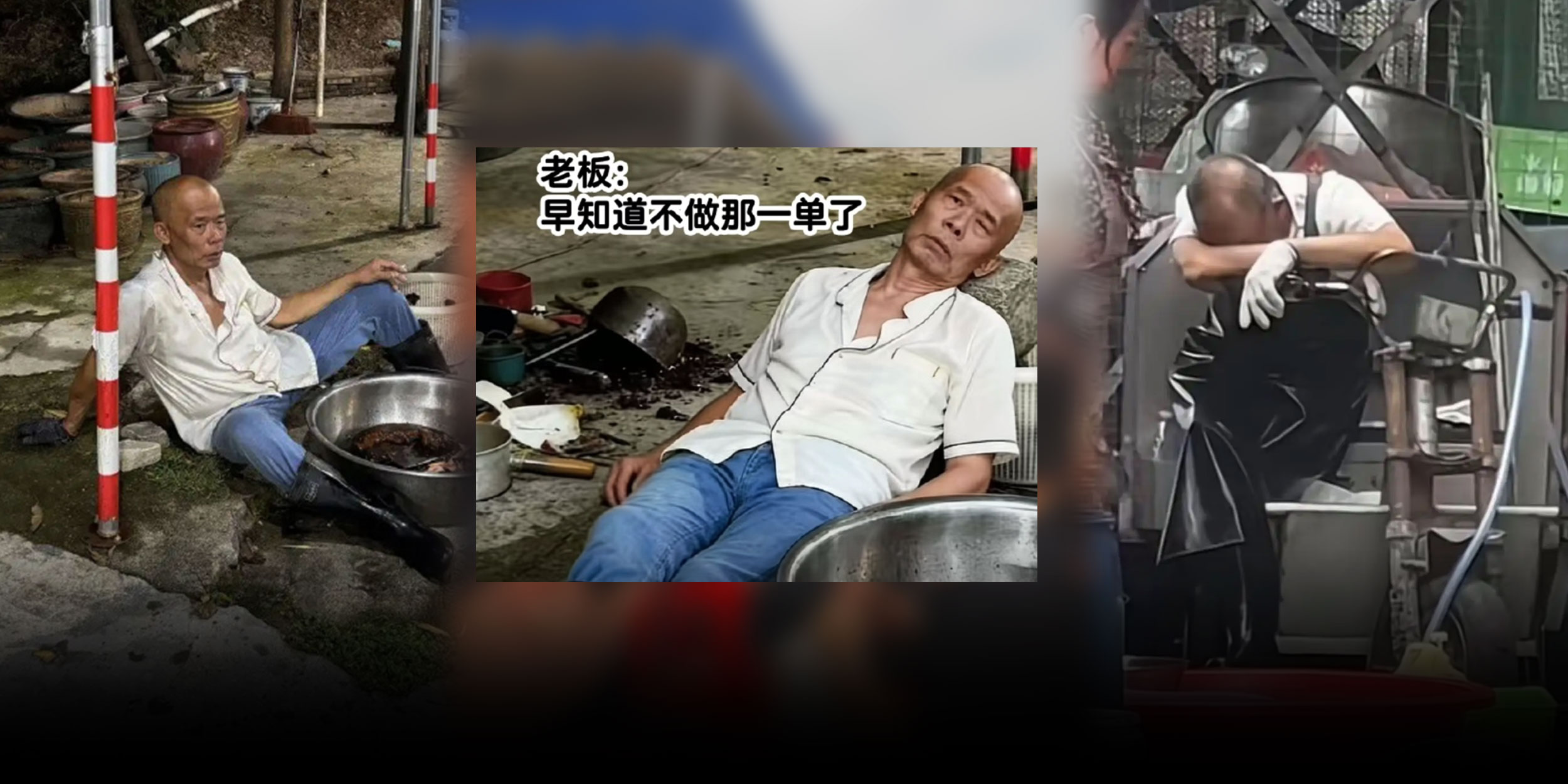
“I’m so tired, my back hurts,” the owner told domestic media, adding that he only sleeps a few hours a day. “I used to serve about 10 tables a day, close up, sing karaoke, and even take morning walks. Life was relaxed. Now it’s nonstop customers — this kind of money isn’t worth it.”
He also joked that an “aura of killing” hung around him as a result of constantly preparing chickens during the Qingming Festival.
As of Wednesday, a whole chicken costs 258 yuan (roughly $38), while a serving of herbal soup costs 38 yuan, slightly higher than the prices shown in Liu’s video. The restaurant has since posted notices on its premises that it uses externally sourced chickens rather than its own.
Local authorities have stepped in to manage the surge in tourism by introducing crowd control measures. Now, only 200 customers may order food at the hotpot restaurant per day. Outside, the government has begun providing local “food maps,” promoting and identifying nearby restaurants and tourist destinations, many of which also saw full occupancy during the holiday period.
Editor: Marianne Gunnarsson.
(Header image: An AI-generated meme of the owner of the chicken hotpot restaurant, exhausted amidst the new customer traffic in Foshan, Guangdong province, April 2026. From Douyin)