As Services Expand, More Foreigners Seek Treatment in China
By the time Shinebayar Enkhbadrakh was just a few days old, doctors in Mongolia had told his parents that only a living-donor transplant could save his life.
Diagnosed with biliary atresia, a rare disease that blocks the bile ducts and causes toxins to build up in the body, his family had few options and little time. “This was his only chance but no hospital in Mongolia could perform the procedure on an infant,” his mother, Khurelbaatar Nasantogtokh, told Sixth Tone.
So when physicians suggested hospitals in neighboring China, the family rushed to Shanghai’s Renji Hospital last September. Tests confirmed the father as a compatible donor, and surgeons performed a six-hour procedure, transplanting 250 grams — about one-fifth of his liver — into Shinebayar.
And though paying for the transplant and recovery, which totaled nearly 200,000 yuan ($29,000), required financial help from relatives, friends, and outside support, the family was stunned by how quickly Shinebayar’s condition improved.
Before the surgery, his skin was a deep yellow, his abdomen swollen, and his stools pale, signs of severe liver failure. Afterward, his jaundice faded, his breathing steadied, and his abdomen softened. “He looked completely healthy,” his mother recalled.
Shinebayar is one of a growing number of overseas patients traveling to China for medical treatment, including procedures ranging from traditional Chinese medicine to cancer care, often drawn by lower costs, shorter wait times, and expanding specialist services.
Major Chinese hospitals recorded about 1.28 million international patient visits in 2025, up 73.6% from three years earlier, according to data from the National Health Commission. Patient numbers from Europe and North America doubled over the same period.
At the same time, Chinese hospitals and health technology companies are expanding their presence overseas, providing clinical services, digital hospital systems, and AI-assisted diagnostic tools in countries across Asia, Africa, and the Middle East.
Around the world
One recent example circulated widely on social media.
A user identified only as Amie, a U.K. citizen who had lived with persistent stomach pain for more than a year, said she faced months of waiting for a specialist appointment before deciding to seek care in China.
At a public hospital, tests, diagnosis, and treatment were completed quickly for about 2,800 yuan ($400), less than the cost of private care in the U.K. Her account drew strong online attention, prompting other foreigners to share similar stories of comparatively fast and inexpensive treatment in Chinese hospitals.
Authorities are now seeking to channel that interest through pilot medical tourism programs. Beijing launched an international medical initiative in 2019 with seven participating hospitals, a number that has since grown to around 20.
Shanghai followed in 2023 with a pilot covering 13 hospitals across specialties including oncology, cardiology, and neurology, and introduced the country’s first provincial-level standard for international medical services the following year.
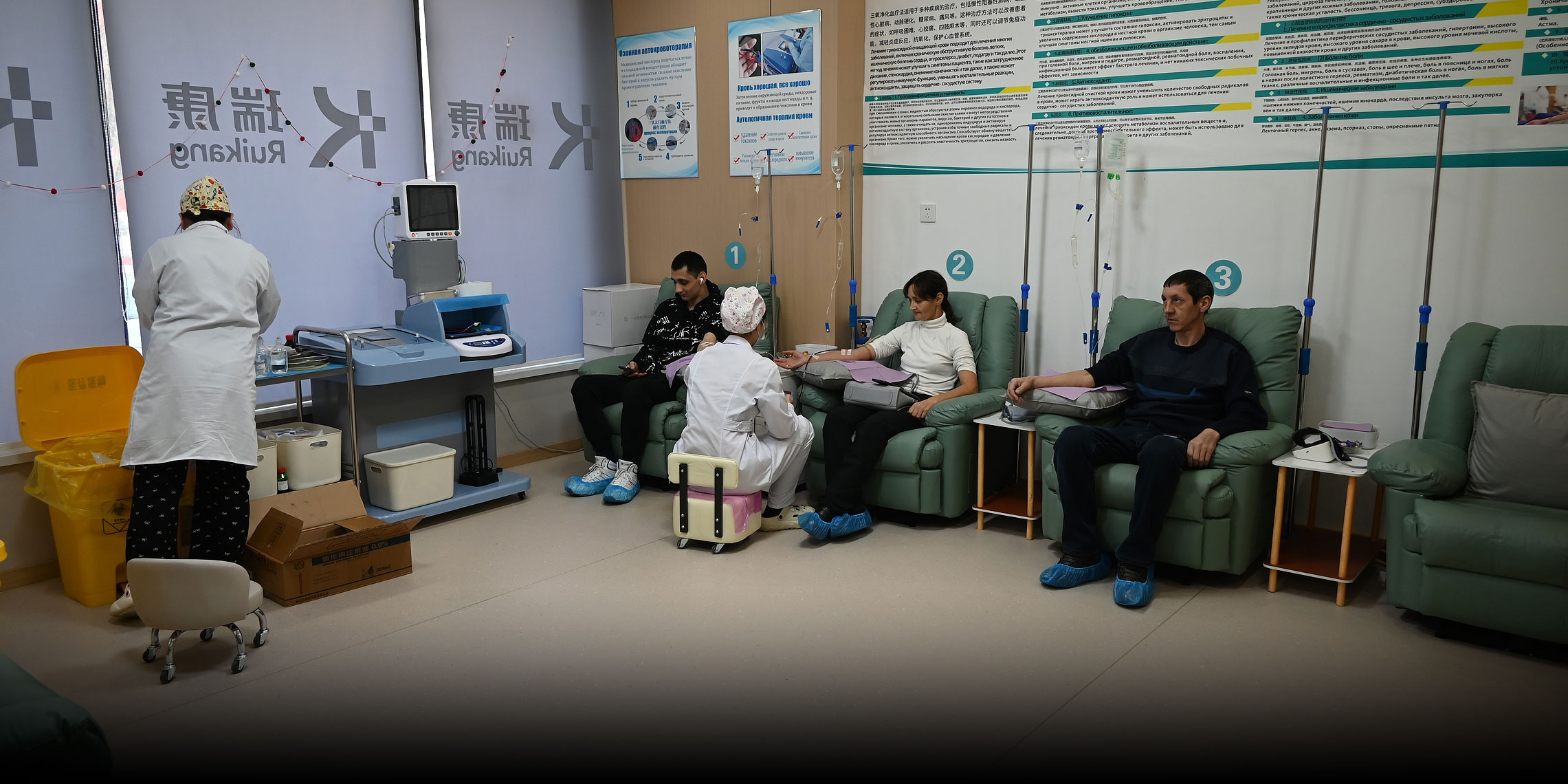
Other regions are developing more targeted offerings. While border cities in northeastern Heilongjiang province cater to Russian visitors seeking traditional Chinese medicine, the southern island province of Hainan promotes recovery-focused care for chronic illness.
Such international services operate separately from routine public hospital care and charge higher fees, accounting for less than 10% of total hospital services under domestic regulations.
At the same time, China is also expanding its medical reach, exporting clinical expertise and health technology alongside the growth in foreign patients arriving for care. Chinese firms are already supplying AI-assisted diagnostic tools and medical devices to hospitals and institutions across Asia, Africa, and the Middle East.
Last May, the Shanghai-based startup Synyi AI launched a pilot program in Saudi Arabia in which a virtual doctor diagnoses and prescribes treatment for 30 common respiratory conditions. The system, known as Dr. Hua, can communicate in both English and Arabic and draws on a database of roughly 300,000 Arabic medical terms.
Public hospitals are pursuing similar efforts. Shanghai’s Renji Hospital presented a “smart healthcare” system at the 2026 Dubai World Health Expo that includes digital operating rooms, AI-supported intensive care units, internet-based hospital platforms, and anesthesia management tools.
Wang Chunming, who leads the hospital’s smart healthcare division, said the system has reduced nursing workload by about 42,000 hours annually and cut safety incidents during shift handovers by 63%.
“It allows our medical resources to serve any area with internet access,” he said.
Last year, Renji’s online hospital system handled nearly 700,000 consultations nationwide, and countries including Indonesia and Mongolia have expressed interest in using the system to serve remote communities.
Editors: Marianne Gunnarsson and Apurva.
(Header image: Russian patients receive treatment at a dental clinic in Heihe, Heilongjiang province, Dec. 24, 2025. VCG)