A Private League Tests a New Pro Baseball Playbook in China
Between innings at Zhongshan Park Baseball Field, in southern China’s tech hub Shenzhen, the fight songs took over.
Each team had its own pun-heavy lyrics set to pop hooks, and the stands sang back on cue as cheerleaders counted in choreographed routines. Children climbed onto seats to copy the moves, parents filmed on their phones, and players joined dances ready to post on social media after big plays and awards.
This was how the new Chinese Professional Baseball league introduced itself in January: part sport, part entertainment.
And by the time the Shenzhen Bluesox lifted the inaugural title on home soil, edging out the Shanghai Dragons 4-3 in game three to secure the series, the CPB league had completed a monthlong debut season. Featuring four teams mixing young domestic players with overseas professionals, it made for a tightly staged first run.
The new league arrives in a sport that has struggled to establish a stable professional footing in China: the state-run China Baseball League, overseen by the China Baseball Association, has existed in various forms since 2002, with a primary focus on player development and periods of financial strain.
The CPB has been built as a market-facing product that pairs competition with entertainment in an effort to grow audiences and sustain interest. Wang Shili, CPB brand marketing director, said the league leaned into music, choreography, and giveaways to lower the barrier for new fans.
“Baseball is new for a lot of people here,” she said. “We wanted to give them a different experience around the game, and to make it enjoyable for players and fans alike.”
With support from the state-run system, organizers say the league is intended to create an additional pathway for players, combining paid professional competition with continued access to national-team selection. A summer season is planned, with expansion expected to follow.
Building the base
By the time the Shenzhen Bluesox clinched the spring league title, 6-year-old Zhu Zixu had attended more than a dozen games during the season.
“He just really loves the game of baseball,” said his mother, Li Qin, adding that his love for the sport began close to home. The family’s apartment overlooks the Bluesox’s ballpark, and after picking up a bat and ball at 4 and a half, Zhu kept coming back.
During games, his parents filmed as he sang along to team songs and followed the choreographed routines from the stands, posting the clips online. “I like to throw the ball,” Zhu said during a break in play. “But I love to hit it.”
The CPB is betting there are many more like him.
Organizers point to a large but underdeveloped base of players and fans in China, alongside improving national-team results, as evidence that the sport is ready for a broader professional platform.
A white paper released by Major League Baseball estimates China has around 21 million active baseball players and followers. Interest has grown since the national team’s fourth-place finish at the 2024 U-23 Baseball World Cup, its best result to date.
That potential has given the league room to experiment with structure. The CPB is operated by Shanghai-based Coolbang Sports, which has invested directly in the competition alongside a mix of state-owned and listed companies. Commercial partners include sportswear brand Skechers, while snack-food group Want Want Group is set to field a franchised team when the league expands this summer.
From the outset, organizers kept the project small and controlled. Four teams were assembled for the inaugural run, and player salaries were capped at 20,000 to 40,000 yuan ($2,880 to $5,760) for the monthlong season — modest by international standards but higher than those typically paid in the state-run system. The aim, organizers say, is to offer paid competition while keeping players eligible for national-team selection.
The rosters reflected that hybrid approach. Squads ranged from teenage prospects to veterans in their 40s. Among them was infielder Wu Qirui, Shenzhen’s first pick in the inaugural draft and a member of China’s under-23 national squad.
Wu said international competition against teams from Japan, South Korea, and Puerto Rico sharpened expectations at home. “Those games taught us what it takes to win,” he said. “When people saw us compete, it brought attention — from fans, from young players, and from others who wanted to learn more about baseball in China.”
Others arrived with longer résumés. American right-hander David Reckers, who pitched in the U.S. minor leagues, said the level of play matched the league’s ambitions.
“There’s definitely really good baseball here,” Reckers said. “Playing in China has been a once-in-a-lifetime experience, and I’m excited to see where it goes and hopefully be part of it for the long run.”
Both players were central to Shenzhen’s playoff run, each picking up MVP honors over the weekend. After his performance in game two, Reckers was called back onto the field to accept his award and was promptly pulled into a choreographed, social media-ready dance alongside the cheerleaders, grinning as the crowd roared.
Twenty-four hours later, it was Wu’s turn, driving in the decisive run before collecting his own MVP trophy, which he waved off as a team effort rather than a personal moment.
“What a fun night,” Reckers said. “The fans here — it’s electric. It’s nothing like I’ve experienced before, having the music playing and all the dancing. Playing in China is a once-in-a-lifetime experience. It’s a good thing I can dance.”
The challenge now is sustaining attention beyond the opening run. Zhongshan Park Baseball Field seats roughly 1,000 spectators, but the league reported a cumulative regular-season broadcast audience of more than 8 million across various Chinese social media platforms.
With baseball set to return to the 2028 Summer Olympics in Los Angeles, CPB organizers say their focus remains on building something that lasts. Shenzhen coach Ray Chang, a Chinese-American who spent more than a decade in U.S. minor league baseball before joining Major League Baseball’s development programs in China, sees CPB as a step toward making the sport visible.
“In some ways, CPB is more important than getting the first China-born player into the Major Leagues,” he said. “You need a foundation … you need to have baseball like this every day, for the fans, the young kids to see. That’s how the game grows.”
Editor: Apurva.
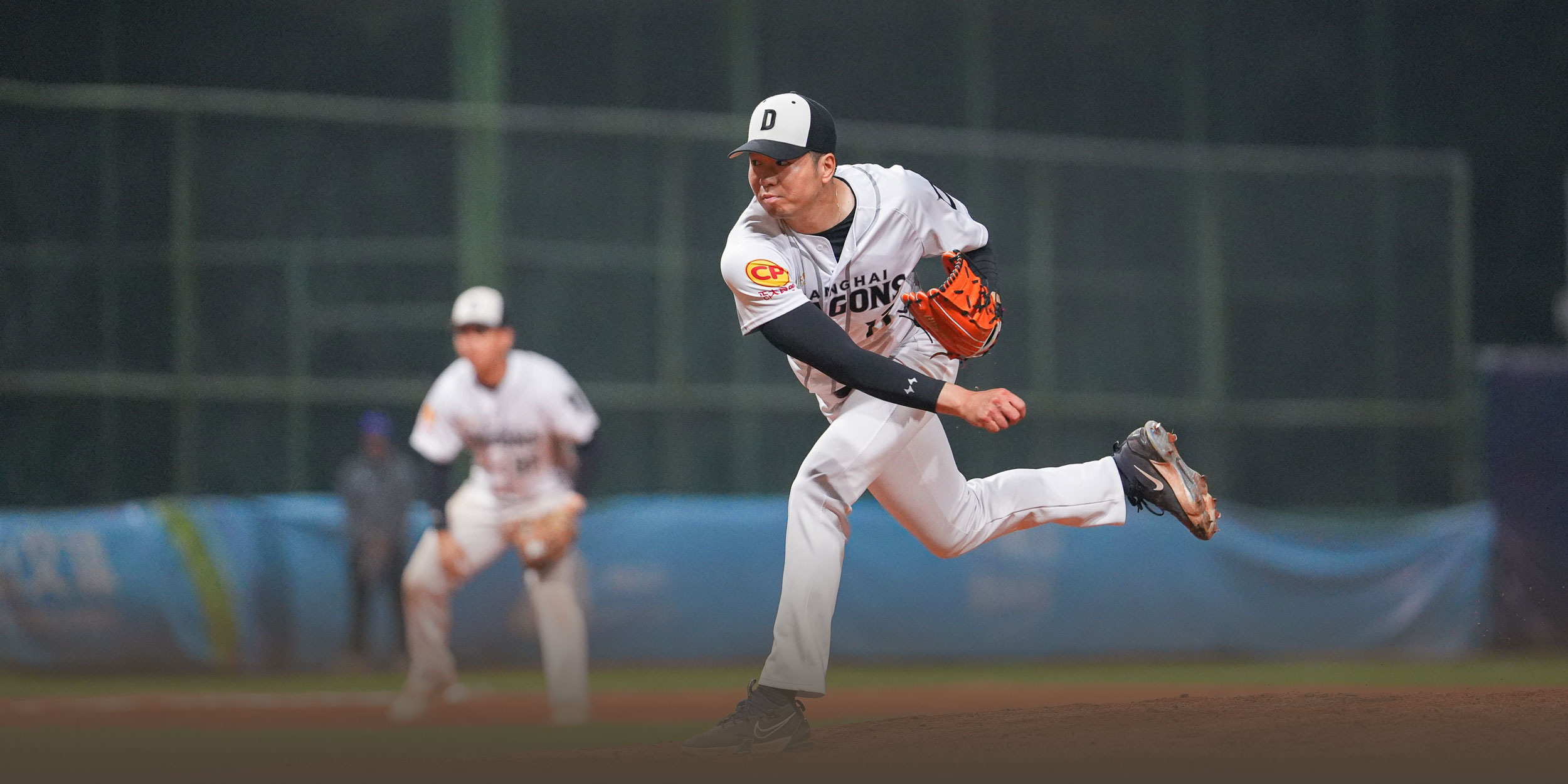
(Header image: Pitcher Gong Haicheng lets rip for the Shanghai Dragons, 2026. Courtesy of CPB)